
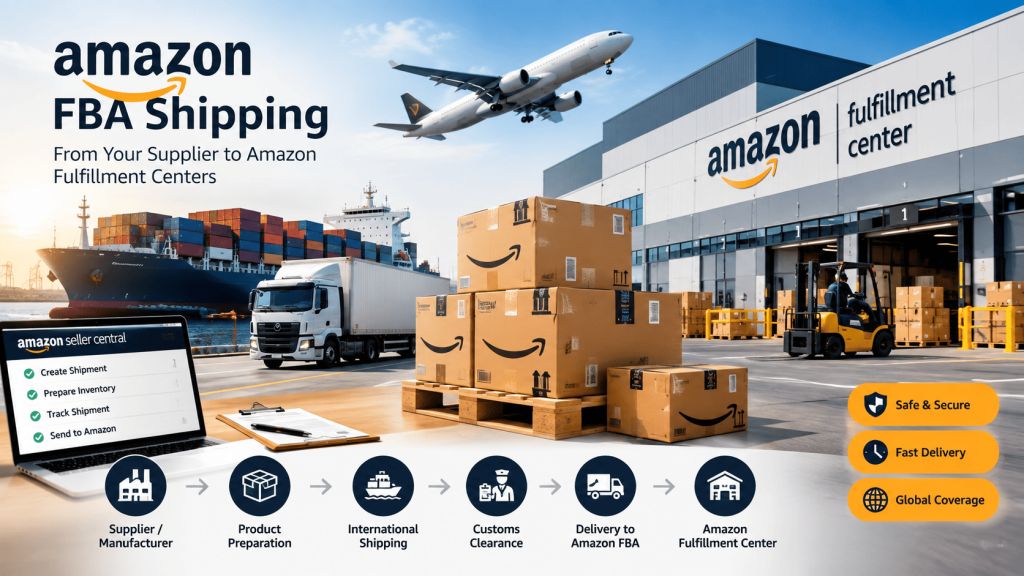
Amazon FBA Shipping: A Complete Guide for E-Commerce Sellers
In the competitive world of e-commerce, efficient inventory management and reliable logistics are essential for running a successful online business. Sellers who use Amazon’s Fulfillment by Amazon (FBA) program need to move their products from manufacturers, suppliers, or warehouses to Amazon fulfillment centers. Amazon FBA Shipping is an important part of this process because it allows sellers to transport inventory efficiently and prepare products for storage and fulfillment. Whether you are a new Amazon seller or an established e-commerce business, understanding how FBA shipping works can help you manage inventory, control shipping costs, and reduce unnecessary delays.
What Is Amazon FBA Shipping?
Amazon FBA Shipping refers to the process of sending products to Amazon fulfillment centers so Amazon can store and fulfill eligible customer orders. Under the FBA model, sellers send their inventory to Amazon, and Amazon handles many fulfillment activities, including storage, picking, packing, shipping, and customer service for eligible orders.
The shipping process can involve several stages. These may include collecting products from a supplier, preparing and labeling inventory, creating shipment information, selecting a transportation method, arranging international shipping when necessary, completing customs procedures, and delivering the inventory to the required Amazon facility.
For sellers who source products internationally, the process can involve additional logistics. Products may travel by sea, air, road, or a combination of transportation methods before reaching the Amazon fulfillment network.
Why Amazon FBA Shipping Is Important
Shipping inventory correctly is an important part of maintaining a successful FBA business. If products arrive late, are incorrectly labeled, or are not prepared according to applicable requirements, sellers may experience delays or additional costs.
Effective shipping planning helps sellers maintain sufficient inventory and reduce the risk of running out of stock. This is especially important for products with consistent customer demand or seasonal sales.
For international sellers, shipping also affects the overall cost of a product. Transportation charges, customs duties, taxes, packaging expenses, and other logistics costs can influence profit margins. Understanding these costs before sending inventory can help sellers make more informed business decisions.
How Amazon FBA Shipping Works
The Amazon FBA Shipping process generally begins with inventory preparation. A seller purchases or manufactures products and prepares them for shipment according to applicable Amazon requirements.
The seller then creates the relevant shipment information through their Amazon selling account. This includes details about the products, quantities, packaging, and shipment.
After the shipment is prepared, the inventory is handed to a transportation provider. Depending on the origin, destination, shipment size, and required delivery time, sellers may use air freight, sea freight, courier services, or other transportation methods.
For international shipments, customs clearance may be required before the goods can continue to their destination. Once the shipment reaches the assigned Amazon facility and is processed, the inventory can become available for fulfillment according to Amazon’s receiving and inventory procedures.
Amazon FBA Shipping From China
China is a major sourcing location for many e-commerce sellers. Businesses often purchase products from Chinese manufacturers and arrange transportation to their target Amazon marketplace.
Shipping from China requires careful planning because sellers need to consider transportation time, customs requirements, product preparation, and total logistics costs.
For large shipments, sea freight can be considered because it can accommodate substantial quantities of inventory. Air freight may be considered when faster transportation is more important.
Sellers should also communicate clearly with suppliers about packaging, product labeling, quantities, shipping dates, and required documentation. Good coordination between the supplier, seller, and logistics provider can help reduce avoidable shipping problems.
Air Freight for Amazon FBA
Air freight is commonly used when sellers need to move inventory relatively quickly. Compared with sea transportation, air shipping generally offers faster transit times, although the cost can be higher.
Air freight may be useful for smaller shipments, urgent inventory replenishment, product launches, or goods that need to reach the destination within a shorter timeframe.
The cost of air freight can depend on factors such as actual weight, dimensional weight, origin, destination, fuel charges, handling, and other logistics fees. Sellers should request detailed quotations and understand what is included before selecting a service.
Sea Freight for Amazon FBA
Sea freight can be suitable for larger quantities of inventory. Sellers who purchase products in bulk may use ocean transportation to move substantial shipments internationally.
Although sea freight generally takes longer than air transportation, it can be a practical option for sellers who can plan inventory replenishment in advance.
Door-to-Door Amazon FBA Shipping
Door-to-door logistics can simplify the transportation process for Amazon sellers. Depending on the provider and service agreement, a logistics company may coordinate collection from the supplier and arrange transportation toward the required destination.
For example, a seller may purchase products from a manufacturer overseas and arrange for a logistics provider to collect the goods from the factory. The provider may then coordinate international transportation, customs procedures, and delivery according to the agreed shipping arrangement.
Door-to-door services can be particularly useful for sellers who do not have extensive international logistics experience. However, sellers should confirm exactly which services and charges are included in the quotation.
Product Preparation for FBA
Product preparation is an important part of the FBA process. Products may need specific packaging, labeling, protection, and identification before they are shipped.
The exact requirements can vary depending on the type of product and the applicable Amazon policies. Sellers should therefore check the current requirements before preparing inventory.
Incorrectly prepared products can create delays or additional preparation work. Before sending a large shipment, sellers should confirm that their products and packaging meet the applicable requirements.
Amazon FBA Labels
Labels help identify products and shipments during the fulfillment process. Sellers should make sure that required labels are applied correctly and remain readable.
Incorrect, damaged, or missing labels can cause inventory processing problems. For this reason, sellers should carefully check their labels before handing products over to the shipping provider.
Packaging for Amazon FBA Shipping
Strong packaging helps protect inventory during transportation. Products can pass through factories, warehouses, vehicles, airports, ports, sorting facilities, and fulfillment centers before reaching their final location.
Packaging should be appropriate for the product. Fragile products may require additional protection, while heavy products may require durable boxes and appropriate internal support.
Sellers should also consider package dimensions because unnecessary packaging can increase shipment volume and potentially affect transportation costs.
Customs Clearance for International FBA Shipments
International FBA shipments may need to pass through customs before entering the destination country. Customs authorities may require information such as commercial invoices, product descriptions, declared values, country of origin, packing information, and other documentation.
Sellers should ensure that all information is accurate and complete. Incorrect documentation or incomplete information can contribute to customs delays.
Import duties, taxes, and other charges may also apply depending on the destination and nature of the products. Sellers should understand who is responsible for customs clearance and payment of applicable charges before the shipment is sent.
Amazon FBA Freight Forwarders
A freight forwarder can help coordinate international transportation for FBA inventory. Depending on the service, a freight forwarder may arrange pickup, transportation, customs coordination, documentation, and delivery.
Choosing a logistics provider with experience in e-commerce shipments can be useful because FBA inventory may involve specific preparation and delivery requirements.
Tracking Amazon FBA Shipments
Shipment tracking provides sellers with visibility throughout the transportation process. Depending on the shipping method, tracking may provide updates about pickup, departure, transit, customs processing, arrival, and delivery.
Tracking is particularly useful when sellers are planning inventory replenishment. Knowing the approximate location and status of a shipment can help sellers make decisions about future orders.
Amazon FBA Shipping Costs
The cost of Amazon FBA Shipping can vary depending on several factors. These include shipment weight, package dimensions, shipment volume, origin, destination, transportation method, customs charges, fuel costs, handling fees, and other logistics services.
How to Reduce Amazon FBA Shipping Costs
Sellers can use several strategies to manage shipping costs. Comparing transportation methods is one option. For example, a seller may compare air freight and sea freight based on the shipment size and required delivery time.
Efficient packaging can also help reduce unnecessary volume. Sellers should avoid excessive packaging while still ensuring that products are adequately protected.
Inventory forecasting is another important factor.
Common Amazon FBA Shipping Mistakes
Several mistakes can create unnecessary problems for sellers. One common mistake is shipping inventory without checking the latest product preparation and labeling requirements.
Another issue is failing to calculate the complete landed cost. Sellers may focus on product and freight costs while overlooking customs duties, taxes, packaging, preparation, and other expenses.
Poor inventory planning can also lead to problems.
Amazon FBA Shipping for Small Businesses
FBA allows small businesses to access a large fulfillment network without building their own warehouse and fulfillment operation. Sellers can send inventory to Amazon and use the available fulfillment infrastructure for eligible products.
However, small businesses still need to manage inventory planning, shipping schedules, preparation, and costs carefully.
Get a Free Air Cargo Quote → or call us on +44 333 444 7866.