
How Does Commercial Cargo Shipping to Pakistan Work for Importers?
Moving freight into Pakistan isn’t just about booking vessel space; it’s about managing handoffs. For businesses routing commercial cargo to Pakistan, success comes down to mastering the flow between international carriers, terminal operators, and local regulatory gates.
The journey starts at your supplier’s factory. Goods move by truck to the origin port, clear export screening, and board a container vessel bound for Port Qasim or the Karachi Port Trust (KPT). Once the ship berths, your local clearing agent files the Goods Declaration (GD) through the Pakistan Single Window (PSW) system.
Your first major strategic fork in the road is volume-based:
| Mode | Best For | Operational Reality |
|---|---|---|
| FCL (Full Container) | Shipments filling 15+ CBM or high-value runs | Lower unit cost; seals stay intact from factory to your warehouse. |
| LCL (Consolidated) | Smaller test batches and spare parts | Cheaper entry point, but adds 3–5 days for de-stuffing at off-dock CFS terminals. |
Under the PSW platform, they tie your financial instruments (like the Electronic Import Form) to your shipping line manifest.
Air Freight vs. Ocean Freight: Which Option Fits Your Pakistan Cargo Strategy?
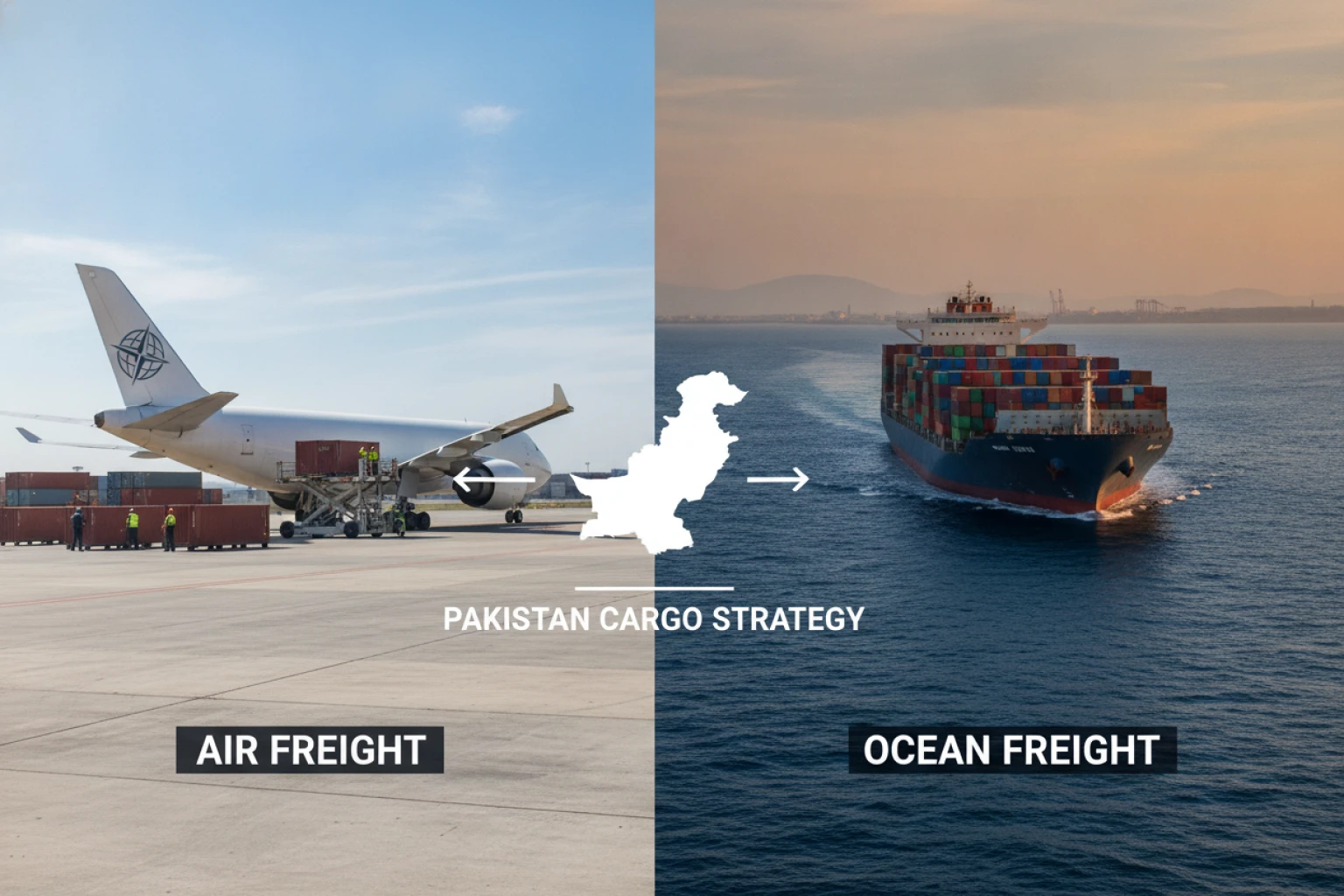
Choosing between air and sea for commercial cargo to Pakistan usually comes down to inventory holding costs versus port-level delays.
Expect ocean transits from major hubs (like Jebel Ali or Shanghai) to take anywhere from 4 to 22 days on the water.
The real catch with ocean cargo isn’t the voyage itself; it’s the terminal dwell time. Customs inspection under the Web Based One Customs (WeBOC) system can stall containers for 4 to 8 extra days.
Air cargo bypasses the seaside bottlenecks entirely. Dedicated freighters and passenger bellies run directly from Gulf, European, and East Asian hubs into Jinnah International (KHI), Allama Iqbal (LHE), and Islamabad (ISB). This is where you send high-value textiles, pharmaceuticals, or line-stopping automotive components.
The tipping point between modes hinges on your cargo’s chargeable weight and volume:
| Mode | Best For | Typical Pricing Unit | Port/Airport Clearance Window |
|---|---|---|---|
| Ocean (FCL/LCL) | Shipments > 1.5 CBM or > 500 kg | Per CBM or flat container rate | 5–9 working days |
| Air Freight | Shipments < 150 kg or critical timeline | Chargeable weight (kg) | 24–48 hours |
Once you exceed 300–400 kg, sea freight almost always wins on pure freight cost. Just ensure your margins can survive a two-week dwell buffer at the ports before committing to the water. Urgent production downtime? Skip standard air entirely and look into an on-board courier or partial air charter directly into Lahore or Karachi.
What Regulatory Documents Are Legally Required for Customs Clearance in Pakistan?
Pakistani customs operates under strict Federal Board of Revenue (FBR) oversight, meaning paperwork discrepancies almost always trigger physical cargo examinations, administrative holds, or outright penalties.
Your first operational hurdle is the Pakistan Single Window (PSW) system. Without this subscription, filing the mandatory Goods Declaration (GD) simply cannot happen.
From there, every standard consignment requires a baseline documentary packet:
Commercial Invoice
Must clearly break down the FOB value, freight, currency, HS codes, and a detailed merchandise description.
Packing List
Itemizing net/gross weights, container numbers, and specific package marks.
Transport Document
A Clean on Board, original Bill of Lading (B/L) for sea freight or an Air Waybill (AWB) for air shipments.
Certificate of Origin
Issued by the exporting country’s chamber of commerce to substantiate tariff classification and trade agreement concessions.
Financial verification is where most first-time shippers run into costly delays
Certain commodities face additional technical walls:
| Regulated Cargo Type | Mandatory Clearance Document | Regulatory Authority |
|---|---|---|
| Agricultural / Perishables | Phytosanitary Certificate | Department of Plant Protection (DPP) |
| Industrial / Steel / Chemicals | Quality Compliance Certificate | Pakistan Standards & Quality Control Authority (PSQCA) |
Skip verifying these HS-code-specific technical certificates prior to departure, and you risk your shipment being ordered for re-export at your own expense.
How Are Pakistan Customs Tariffs, Duties, and Taxes Calculated on Commercial Freight?
The Federal Board of Revenue (FBR) doesn’t just assess a flat tax on your commercial invoice.
Getting it right starts with the eight-digit Pakistan Customs Tariff (PCT) code. Never rely solely on an exporter’s generic HS code; Pakistan frequently adds local sub-classifications that trigger unexpected protections.
Once your PCT code establishes the baseline, customs calculates charges sequentially on the Assessable Value (AV):
$$\text{AV} = \text{C&F Value} + \text{Insurance (1%)} + \text{Landing Charges (1% of C&F + Insurance)}$$
From there, taxes stack progressively rather than in parallel:
Customs Duty
Applied directly to AV (typically 0% to 20%).
Additional Customs Duty
Added on top of AV, usually ranging from 2% to 7%.
Regulatory Duty
Slapped on luxury or locally protected goods to deter imports.
Sales Tax
Usually 18%, calculated on $(AV + CD + ACD + RD)$.
Additional Sales Tax
A 3% levy often triggered on commercial finished goods.
| Taxpayer Status | Typical WHT on Commercial Imports | Real-World Impact |
|---|---|---|
| Active Taxpayer (ATL) | 5.5% to 6% | Standard rate; adjustable against annual corporate returns. |
| Non-Active Taxpayer | 11% to 12% | 100% penalty surcharge; ties up significant working capital. |
WHT applies to the entire cumulative sum: assessable value plus every duty and sales tax combined. 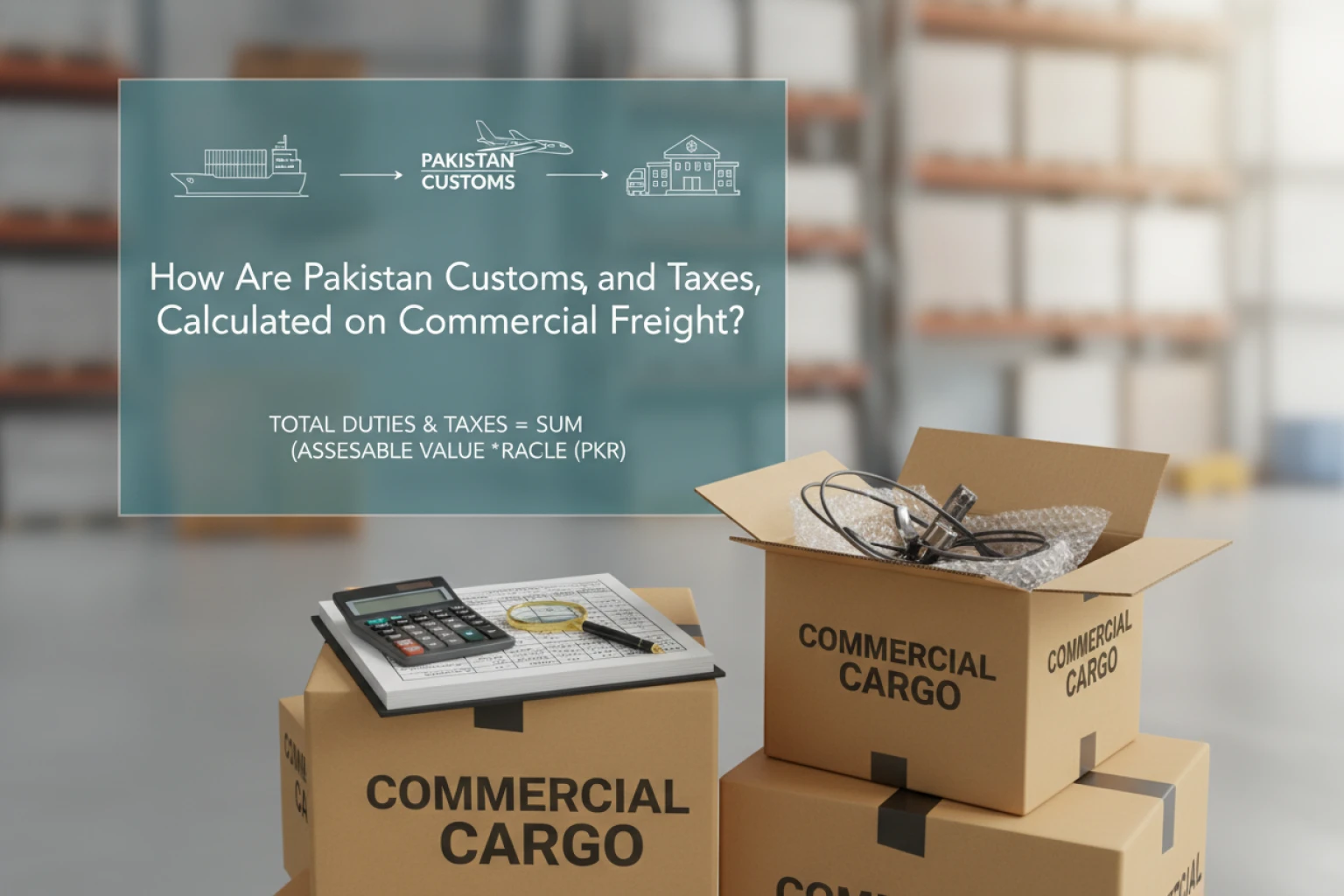
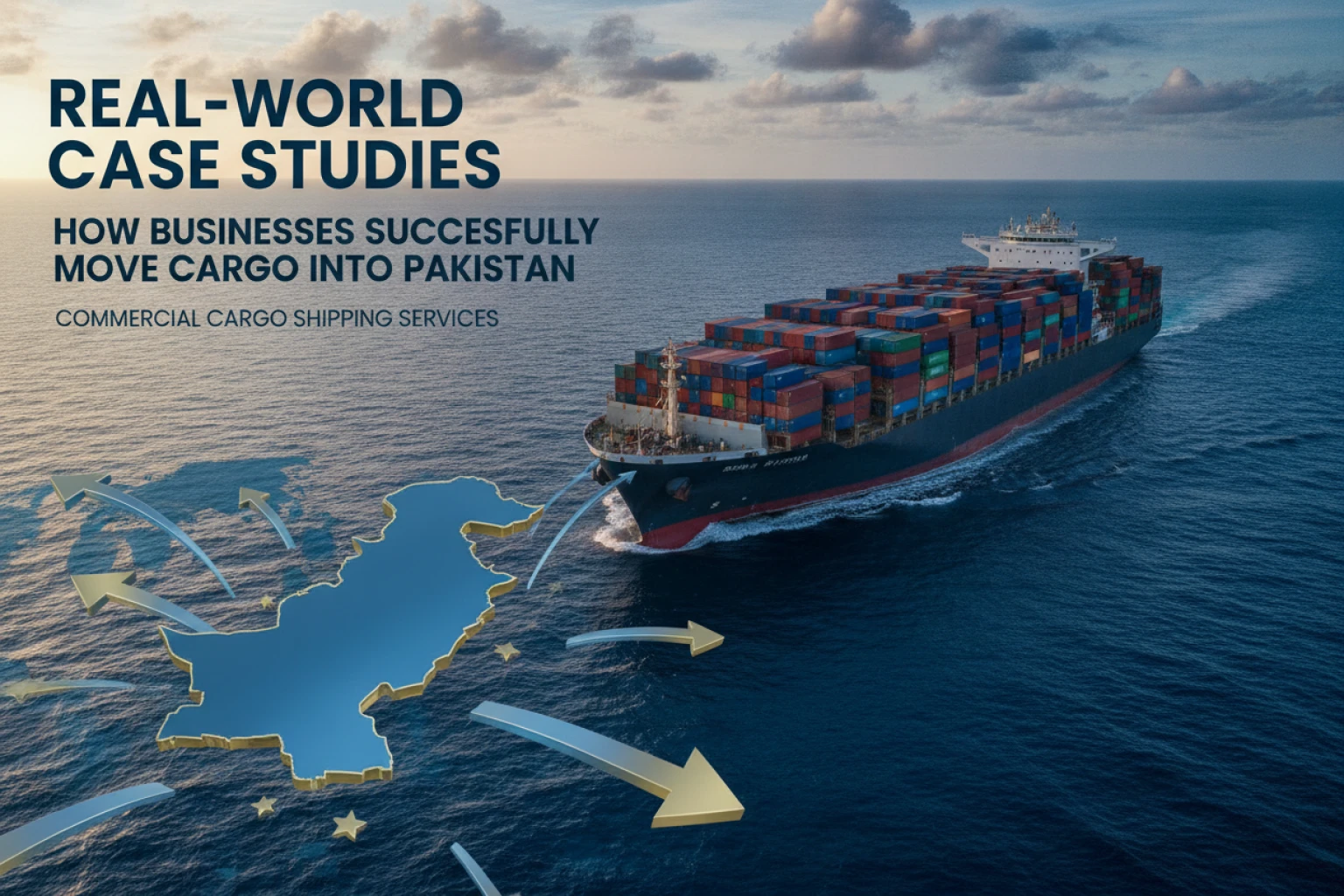
Real-World Case Studies: How Businesses Successfully Move Cargo into Pakistan
Theory falls apart quickly when your boxes are stuck at the terminal and storage meters are running. Moving commercial cargo to Pakistan requires navigating local bottlenecks that standard freight playbooks simply do not cover. Here is how two operators handled those realities on the ground.
Slashing Demurrage on Heavy Machinery at Port Qasim
A Faisalabad textile mill imported eight 40-foot containers of spinning equipment from Europe. Off-dock storage bought them seven additional free days. That buffer let their clearing team resolve HS code discrepancies without triggering the shipping line’s punitive demurrage tiers.
Beating Eid Stockouts via Air Freight into Lahore
A Lahore retail supplier faced factory delays in Shenzhen for high-demand consumer audio gear. Ocean freight was out of the question; missing the pre-Eid shopping window meant dead inventory.
They pivoted to consolidated air freight directly into Allama Iqbal International Airport (LHE).
| Strategy Component | Port Qasim Off-Dock CFS | Direct LHE Air Cargo |
|---|---|---|
| Typical Clearance Time | 5 to 8 working days | 24 to 48 hours |
| Storage Risk | High after day 10; off-dock buffers line fees | Extreme after 48 hours in airport sheds |
| Best Used For | Bulky, non-urgent industrial equipment | Time-critical, high-margin consumer stock |
Clearance Trade-Offs Green Channel vs. Manual Examination
How you set up your files dictates your clearance path in the Weboc (Web Based One Customs) portal. The choice involves clear operational trade-offs:
Green Channel (Automated)
Skips physical examination entirely. Duty debits instantly via the user’s PD account, releasing the goods within hours.
Yellow/Red Channels (Standard Assessment)
Required for newly registered importers, non-standard valuation items, or used machinery. Expect physical checks, laboratory samplings, and an extra 48 to 72 hours of turnaround time.
Common Mistakes to Avoid When Booking Commercial Cargo to Pakistan
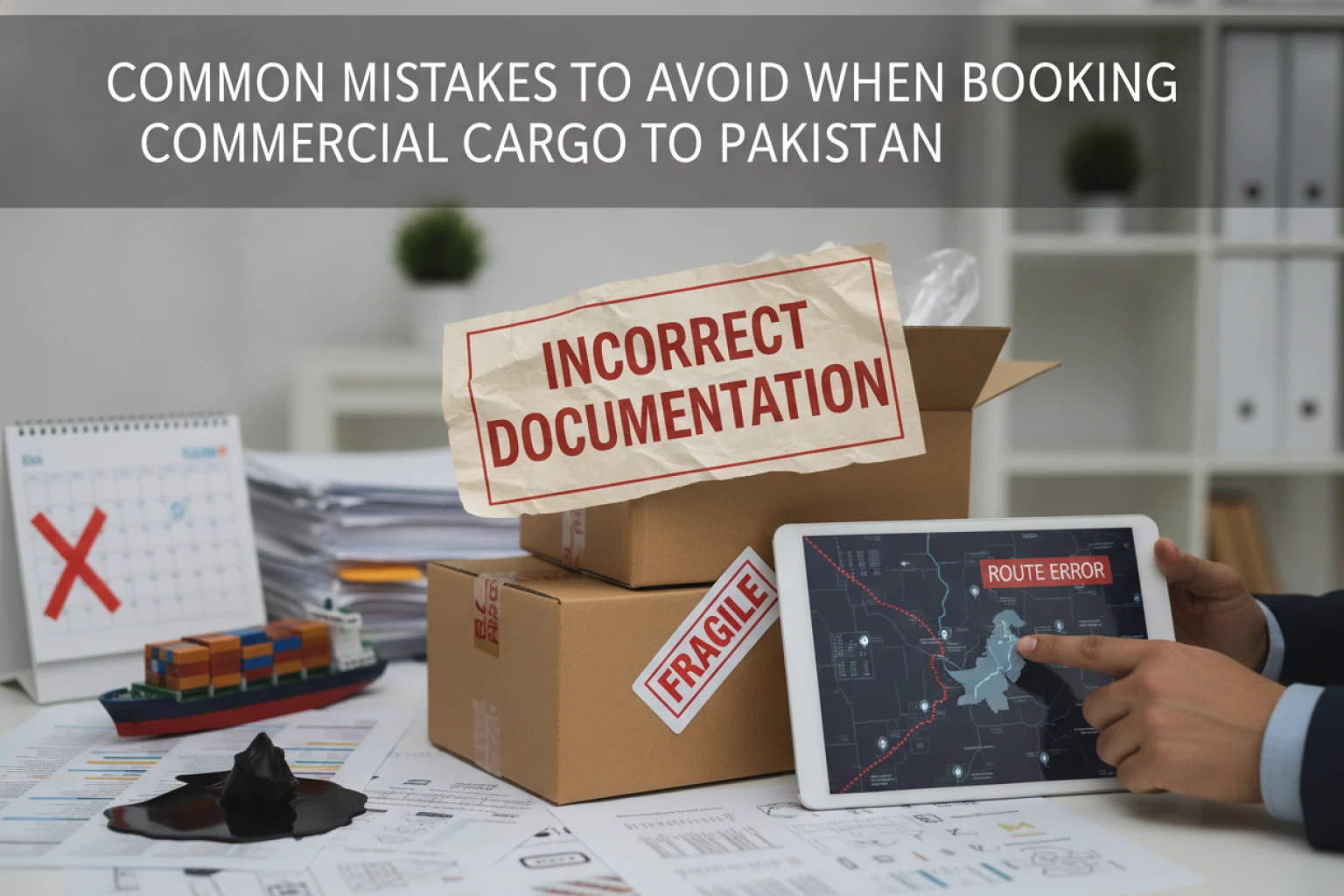
Importing into Pakistan rarely fails on the water. It fails at the dock, buried under regulatory red tape or unexpected invoices.
Here are the missteps that derail shipments most often:
Misdeclaring Pakistan Customs Tariff (PCT) codes
Trying to squeeze an item into an eight-digit PCT heading carrying a lower tariff rate is the fastest way to trigger a Section 32 misdeclaration notice from the Federal Board of Revenue (FBR). Beyond heavy financial penalties, your consignment risks outright confiscation or blacklisting in the Web Based One Customs (WeBOC) system.
Ignoring the latest Import Policy Order (IPO)
The Ministry of Commerce updates its prohibited and restricted lists regularly.
| Charge Type | Where It Hits | Why It Escalates Quickly |
|---|---|---|
| Terminal Demurrage | BAPL, QICT, KICT | Charged by the marine terminal in US dollars once free days expire (typically after 5 to 7 days). |
| Line Detention | Shipping Line | Charged per container per day for holding carrier equipment past the agreed grace window. |
That buffer gives your clearing agent enough breathing room to resolve assessment queries without incurring daily penalty stacks.
How to Choose the Right Freight Partner and Secure Your Next Shipment to Pakistan
Vetting a forwarder for commercial cargo to Pakistan comes down to local operational muscle, not flashy websites. The port floor at Karachi behaves very differently from hubs in Europe or the Gulf.
Native Pakistan Single Window (PSW) proficiency
They must understand automated declarations and financial instrument linking firsthand, not via a third-party agent’s sub-agent.
Terminal fluency
Distinct handling practices at QICT versus KICT dictate turnaround times; your forwarder should have dedicated clearing staff on-site at both.
True inland reach
Moving goods up-country means booking bonded trucking for dry ports like Sialkot or Faisalabad directly through a single bill of lading.
Be ruthless about line-item transparency. A “cheap” ocean rate often disguises punishing destination fees. Insist on a quote that details freight charges separately from local port dues.
| Quote Component | What It Covers | Red Flag to Watch For |
|---|---|---|
| Ocean / Air Leg | Base transit and carrier fuel (BAF) | Lump-sum rates with no detention terms |
| Terminal Handling (THC) | Crane offloading and yard movements | “Port charges at actuals” without a fee cap |
| PSW & Clearance | Weboc/PSW filing, document stampings | Blanket administrative or courier surcharges |
Confirm that your buyer’s bank has finalized the electronic import form (EIF) in PSW. Once those records align, lock in your container release and hand off the consignee details for a clean customs run.
FAQS
What documents are non-negotiable for customs clearance?
Missing paperwork is the fastest way to rack up container demurrage at Karachi. You cannot clear commercial cargo to Pakistan without an authentic commercial invoice, a detailed packing list, a Certificate of Origin, and an endorsed Bill of Lading (or Air Waybill).
Most critically, your buyer must file through the WeBOC (Web Based One Customs) system.
Air freight vs. ocean freight: which should I choose?
Base your decision on cargo volume, production deadlines, and margin tolerance.
| Mode | Typical Transit | Best Used For | Primary Cost Driver |
|---|---|---|---|
| Ocean (FCL/LCL) | 20–35 days | Bulk goods, heavy machinery, raw materials | Container slot availability |
| Air Cargo | 3–7 days | High-value electronics, pharmaceuticals, urgent samples | Chargeable weight (volume vs. actual) |
What common pitfalls should first-time shippers avoid?
New exporters often get caught out by these three operational missteps:
Ignoring the Import Policy Order (IPO)
Pakistan strictly regulates certain goods. Second-hand machinery, specific chemicals, and food items often require pre-shipment inspection certificates or prior ministry approvals.
Under-declaring values
Customs valuation officers cross-reference import values against local valuation rulings. If your declared price falls below their benchmark, they will reassess the shipment at a higher tariff and apply penalties.
You can also track your parcel by visiting out services page or contact us on whatsapp.