
How Does International Cargo Shipping Work for UK Households Relocating in 2027?
Standing in a hallway full of flat-pack boxes while your kids ask where their favourite toys are is stressful enough without deciphering global freight logistics. Moving overseas from the UK isn’t just about hiring a bigger van; it means handing your life’s possessions over to international supply chains. This cargo shipping guide cuts through the jargon so you can plan your move with realistic budgets, sane timelines, and zero nasty surprises at the border.
At its core, household relocation relies on three distinct transit methods:
Ocean freight
The default, cost-effective choice for long-haul moves (think Australia, Canada, or the US). It’s slower, but handles heavy furniture with ease.
Road haulage
Ideal for mainland Europe moves via cross-Channel ferries or Eurotunnel, offering direct kerbside-to-kerbside transport.
Air freight
Fast but brutally expensive. Reserve this strictly for high-priority essentials, work laptops, or baby kit while you wait for the main shipment.
The biggest decision you will make comes down to volume. If you are packing up a four-bedroom detached house in Cheshire, you will need a Full Container Load (FCL), where a steel box is reserved solely for your belongings. For a couple leaving a two-bedroom terrace in Bristol, Less than Container Load (LCL)—sharing space inside a consolidated container—saves money, though handling risks rise because goods are transferred between warehouses.
| Move Size | Typical Setup | Best Method | Average Door-to-Door Transit |
|---|---|---|---|
| 1–2 Bed Flat / Terrace | 10–15 m³ (Shared) | LCL Ocean / Groupage | 8–12 weeks |
| 3–4+ Bed Detached | 30–65 m³ (Sole use) | 20ft or 40ft FCL Ocean | 5–8 weeks |
| EU Relocation | Any size | Dedicated or Part-load Road | 5–12 days |
Gone are the days when your sofa disappeared into a maritime black hole for three months. Modern 2027 shipping standards lean heavily on IoT container sensors that transmit live updates on internal temperature, humidity, and tilt. Coupled with port milestone tracking, you will get automated pings when your container is loaded at Felixstowe or clears customs in Singapore, alongside dynamic ETA updates that adjust for channel weather or terminal congestion.
The end-to-end journey follows a predictable rhythm:
In-home video or physical survey
An estimator calculates exact cubic volume and spots awkward items (like pianos).
Export packing & collection
Professional crews wrap, inventory, and seal your goods (usually 2–4 weeks before departure).
Port departure & sea transit
Vessel sails, monitored via real-time telemetry.
Customs clearance & delivery
Destination agents clear duties, unseal the box, and unload into your new home. Plan for an extra week here if local agricultural inspections apply.

Which Container Shipping Option Best Fits Your Family’s Budget and Timeline?
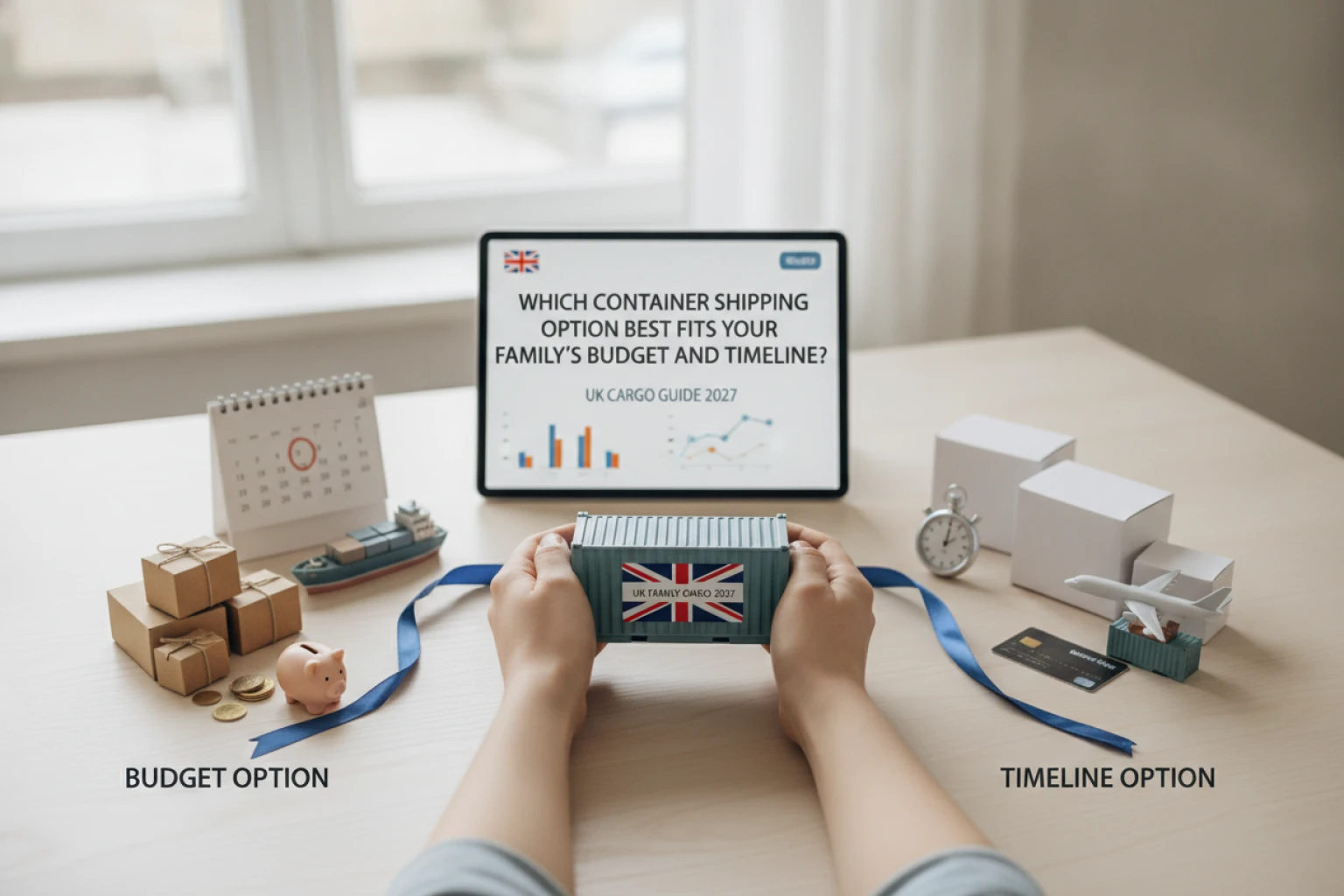
Choosing how your home travels across an ocean comes down to a classic juggle: how quickly do you need your life unpacked, and what are you willing to spend? No single method works for every household, but matching your volume to the right transit mode keeps costs from spiralling.
For whole-house moves, Full Container Load (FCL) gives you exclusive use of a 20ft or 40ft steel box. Once packed at your UK doorstep, the container is sealed until it clears destination customs. This cuts out intermediate handling, significantly lowering the risk of scuffed heirloom tables or smashed crockery.
If you are packing up a flat or leaving bulky furniture behind, Less than Container Load (LCL)—often sold as shared groupage—lets you pay only for the cubic metres your boxed life takes up. The trade-off is time. Your crates sit in a consolidation warehouse until the forwarder fills the entire box, easily adding four to eight weeks to your door-to-door wait.
A practical middle ground many families use is a split shipment. Air freight is far too expensive for heavy sofas, but paying for a 150kg airlift for cot hardware, remote-work laptops, school uniforms, and a few weeks of seasonal clothes means you can live comfortably while your sea container takes the slow route.
When reviewing quotes, look past the baseline ocean rate. A reliable cargo shipping guide should prepare you for the full invoice, which includes:
Origin handling
Collection, export packing, and UK port terminal transfer.
Bunker Adjustment Factor (BAF)
A floating surcharge covering vessel fuel fluctuations.
Destination Terminal Handling Charges (THC)
Offloading fees levied by the arrival port, which shock families when left off initial estimates.
Sea & Air Comparison
| Move Type | Best For | Typical Transit | Handling Profile |
|---|---|---|---|
| FCL (Sole Use) | 3–4 bed homes; fragile furniture | 4–7 weeks | Sealed at origin; minimal touch points |
| LCL (Groupage) | Partial moves; tight budgets | 8–14 weeks | Handled at multiple consolidation hubs |
| Air Freight | Nursery essentials; work tools | 4–8 days | High security; repacked into aircraft pallets |
If your budget is rigid, go LCL and borrow temporary furniture on arrival. If protecting your sanity and high-value belongings matters most, book FCL—the reduced handling alone is worth the extra freight cost.
Step-by-Step Logistics: Preparing, Inventorying, and Packing Your UK Home
Packing up a British household for sea transit isn’t just a bigger version of moving down the M4. Ocean freight exposes your belongings to weeks of humidity, violent engine vibration, and rough swell. Getting it right takes methodical prep.
Give yourself an eight-week runway. Week eight starts with a ruthless room-by-room audit. Flat-pack particle board rarely survives reassembly after a sea voyage, so sell it on Facebook Marketplace. Focus instead on solid heirlooms and items that would cost a fortune to replace at your destination.
During weeks six through four, set up your tracking system. Marine insurers will not accept vague declarations like “kitchen miscellany.”
Number and cross-reference every carton against a master digital spreadsheet.
Snap timestamped photos of high-ticket electronics and antiques before wrapping.
Keep a distinct sub-sheet for items valued over £1,500, noting serial numbers.
the actual boxing, be realistic about insurance risk. Underwriters view DIY packing with deep suspicion.
| Packing Method | Cost | Marine Insurance Impact | Best Suited For |
|---|---|---|---|
| Professional Export Wrap | Higher upfront fee | Full cover for breakage, loss, and structural damage | Antiques, glassware, upholstered sofas |
| Packed by Owner (PBO) | Lower (materials only) | Limited: covers total loss/theft of whole box only | Linens, non-fragile toys, hard-wearing clothes |
Finally, weed out the customs red flags before movers arrive. Aerosols, lawnmower fuel, open cleaning chemicals, and half-used olive oil bottles will instantly fail port health inspections. Untreated timber without phytosanitary marks can get your entire container quarantined in places like Australia or the US.
As a rule of thumb for this stage of our cargo shipping guide: if it contains a loose lithium-ion battery, charges a power tool, or smells like solvent, it stays behind in the UK.

Post-Brexit Customs, Import Duties, and Mandatory Paperwork for Moving Abroad
Moving your home out of Great Britain isn’t as simple as handing your sofa to a driver and waving goodbye. Since the UK left the EU customs union, every box leaving England, Scotland, or Wales faces formal export and import controls.
First, your mover must log an export declaration through HMRC’s Customs Declaration Service (CDS). While your international mover handles the actual software entry, you feed them the data. Mess up an item value or miss a restricted item here, and your container sits on the dock at Southampton or Felixstowe running up demurrage charges before it even touches water.
To avoid eye-watering import duties at your destination, you will lean heavily on Transfer of Residence (ToR) relief. Most jurisdictions—including the EU, Australia, and the US—grant duty-free entry for personal effects, provided you meet strict criteria.
| Destination Region | Minimum Prior Ownership | Reside Outside Destination | Deadline to Import Goods |
|---|---|---|---|
| European Union | 6 continuous months | 12 continuous months | Within 12 months of arrival |
| United States | 12 continuous months | N/A (non-residents qualify) | Within 12 months of arrival |
| Australia | 12 continuous months | Permanent residency granted | Personal effects can precede arrival |
Tip: If you bought brand-new kitchen appliances last month, leave them off your duty-free claim. New items attract standard local VAT and customs duties.
Any reliable cargo shipping guide will stress that paperwork errors cause 90% of port delays. You cannot clear customs with vague descriptions like “miscellaneous kitchenware.” Border officials want precision.
Have this core document pack assembled as PDFs before the packing crew arrives:
Bill of Lading (or Sea Waybill)
Issued by the shipping line once the vessel departs.
Itemised packing inventory
Numbered by box, detailing used versus new items.
Destination entry approval
Valid work permits, long-stay visas, or proof of foreign home purchase/lease.
Valued inventory form
Specifying replacement values for maritime insurance and customs bond calculations.
Moving to France, Spain, or Germany carries an extra trap: each EU member state interprets Union Customs Code rules slightly differently. France insists on a certificat de non-cession (promising you won’t sell your goods for a year), while Spain demands an active NIE and town hall registration (empadronamiento) before releasing your container. Sort these destination registrations early, or your sea freight will clear UK CDS smoothly only to get impounded across the Channel.
Real Case Studies: Average Moving Costs and Timelines from the UK to Major Destinations
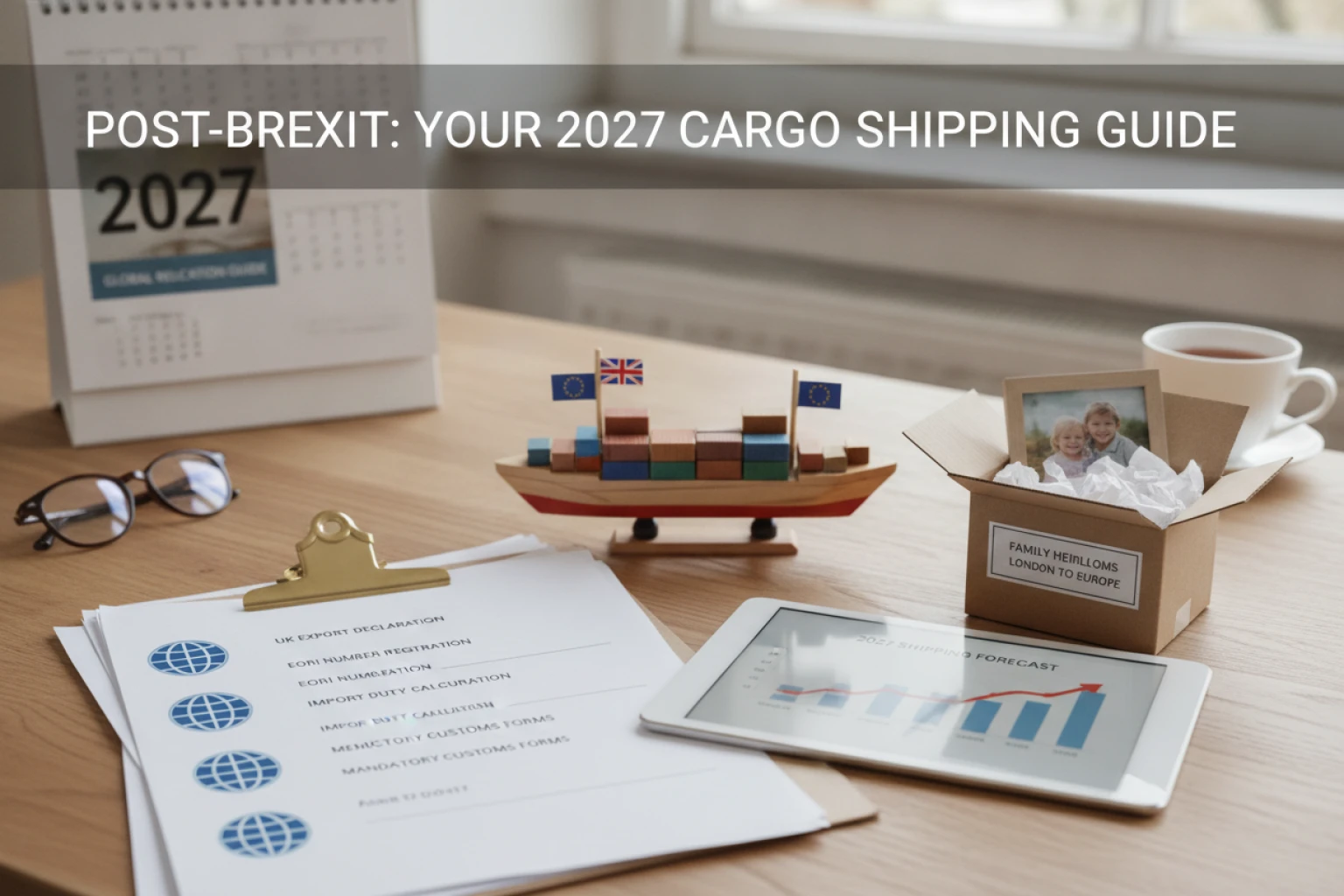
Theoretical estimates rarely survive contact with an actual shipping port. To give you a realistic picture for this cargo shipping guide, here is how three actual family relocations played out across different routes, volumes, and freight modes.
Manchester to Melbourne: The Full Household Move
The Davies family packed up their three-bedroom semi in Manchester, loading a dedicated 20ft Full Container Load (FCL).
- Transit Window: 58 days port-to-port (71 days door-to-door, stretched by berthing delays off Melbourne’s coast).
- Final Spend: £7,450, including export wrapping, sea freight, and Australian Biosecurity (DAFF) inspection fees.
Opting for a sole-use container meant their shipment bypassed intermediate handling. The kicker was quarantine: Australia inspects outdoor gear rigorously. Because the Davies family pressure-washed their garden furniture and mountain bikes before packing, their container cleared DAFF inspection on the first pass, dodging costly depot wash fees.
London to Toronto: Partial Load via Groupage
Sarah and Tom relocated their essentials—roughly 7 cubic metres (cbm)—from a two-bed flat in Clapham using shared container space (LCL/groupage).
- Transit Window: 48 days total.
- Final Spend: £1,890, averaging around £270 per cbm.
The trade-off was predictability. Their goods waited nearly three weeks at a Felixstowe warehouse until the forwarder filled the remaining container volume. If you need your belongings by a hard start date, groupage will test your patience.
Bristol to Alicante: Road Freight vs. Short-Sea
Moving to Spain post-Brexit requires careful customs handling. The Miller family weighed a 40ft maritime container against a dedicated 7.5-tonne Luton road-freight van.
| Route Option | Transit Door-to-Door | Customs Complexity | Total Cost |
|---|---|---|---|
| Dedicated Road Van | 4 to 6 days | Fast (cleared at regional inland hubs) | £5,100 |
| Short-Sea Container | 18 to 25 days | High (port-side phytosanitary checks) | £4,350 |
They chose road freight. Paying an extra £750 saved them three weeks of Airbnb rentals and sidestepped maritime port congestion in Valencia entirely.
Avoiding Demurrage and Detention Traps
The costliest surprises in these moves were rarely the ocean freight itself, but storage penalties. When import paperwork stalls, shipping lines charge detention (holding the container outside the terminal) or demurrage (leaving it on the quay too long)—often exceeding £180 per day.
The Davies family avoided this by submitting their Australian customs declaration forms ten days before the vessel docked. Having your transfer of residence paperwork validated prior to arrival ensures your allocated free-time days at the port don’t run out while you’re still hunting for a misplaced utility bill.

Common Cargo Shipping Mistakes That Lead to Delays, Damaged Goods, and Fines
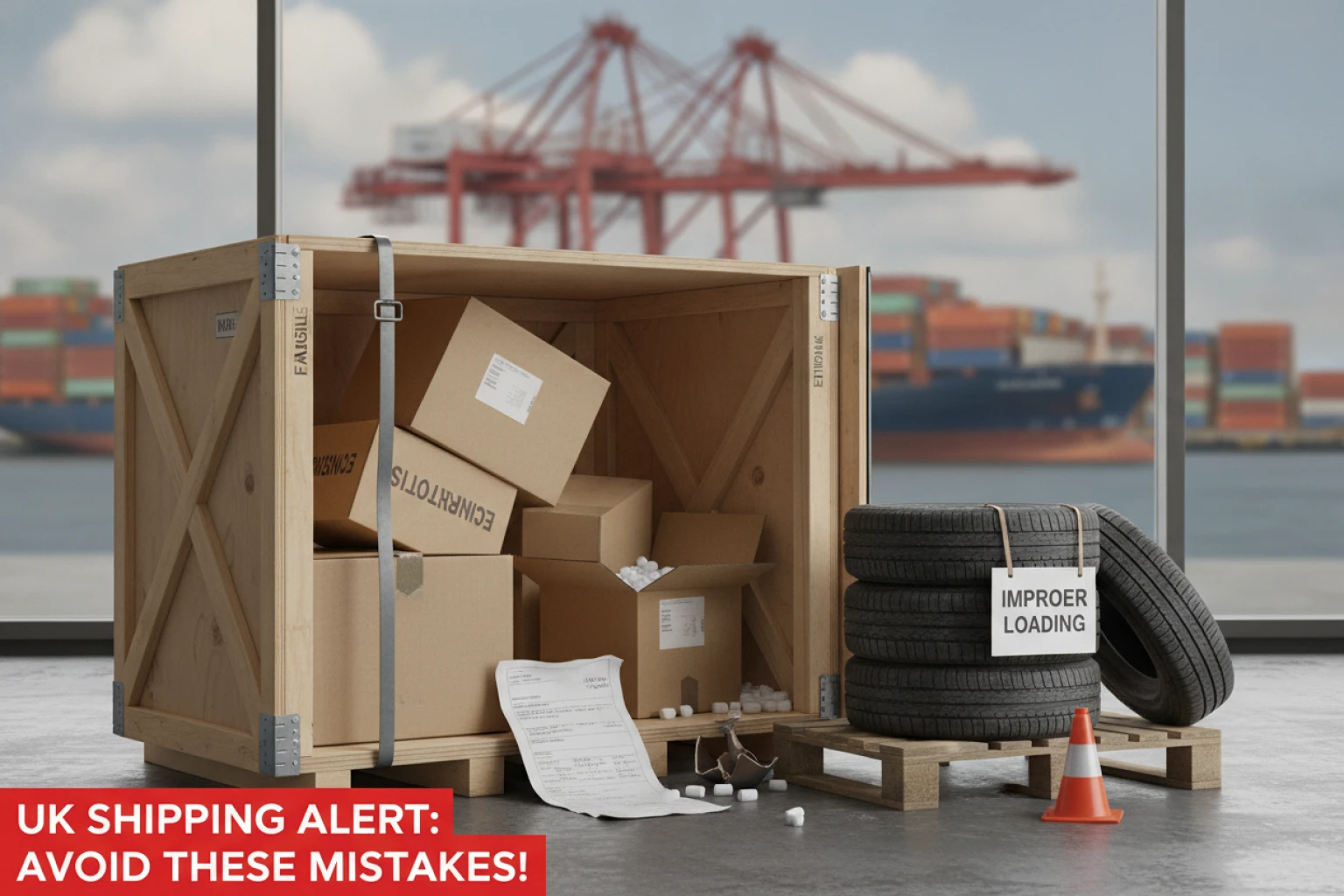
Even a well-planned international move can derail over a few overlooked logistics details. When families map out their relocation, they tend to focus on container drop-off dates rather than port realities. Sidestepping these four frequent missteps will keep your family budget and sanity intact.
1. Counting on Carrier Liability
Basic carrier liability is essentially useless for household goods. It pays pennies on the pound based purely on freight weight, not item value. If a shipping crane drops a container holding your £1,200 OLED TV and an antique dining table, standard carrier compensation might total £40. You need dedicated all-risk marine transit insurance that covers door-to-door transit, loading breakages, and general average claims.
2. Misjudging Volume Over Weight
Sea freight relies heavily on volumetric weight. If your self-packed boxes bulge even slightly at the seams, your actual cube increases. Shipping lines recalculate this volume at the port consolidator. Those extra few cubic feet trigger immediate, non-negotiable supplementary invoices before your container ever boards a vessel.
3. Packing Dirty Outdoor Gear
Countries with fragile ecosystems take biological contaminants seriously. A family bicycle or lawnmower coated in English garden soil will halt your entire container at destination biosecurity.
| Destination Authority | Problem Items | Consequences of Non-Compliance |
|---|---|---|
| Australia (DAFF) | Garden tools, golf clubs, muddy boots | Mandatory commercial wash (£200+), fumigation fees, or destruction |
| New Zealand (MPI) | Camping gear, outdoor toys, dog kennels | Port border holds, re-inspection fees, extensive quarantine delays |
Steam-clean, bleach, and thoroughly dry every piece of outdoor kit before your movers wrap it. If an item cannot be stripped of organic dirt or seeds, leave it behind.
4. Ignoring Bonded Storage Traps
Customs officers regularly pull shipping containers for random physical inspections. If your documentation is vague—such as listing “box of misc items” instead of an itemised packing manifest—that inspection takes days longer. Once your free port laytime expires (often just 3 to 5 days), bonded warehouse demurrage charges accumulate daily. In ports like Melbourne, Auckland, or New York, these daily storage fines run upwards of £150 per day until your cargo is cleared. Keep your paperwork precise to ensure any routine cargo shipping guide protocol doesn’t turn into a warehouse money pit.
Verified Industry Standards: Finding Accredited Movers and Regulatory Protections
Handing over your family’s entire household to a logistics crew is nerve-wracking. If a rogue freight forwarder goes bust mid-transit, your shipping container can end up stranded on a dock in Singapore or Rotterdam, racking up hundreds of pounds a day in demurrage fees.
The simplest way to protect yourself is by checking credentials before paying a deposit. In the UK, prioritize companies affiliated with the BAR Overseas Group (British Association of Removers). Membership isn’t just a badge; it binds the mover to the Advanced Payment Guarantee scheme. If the company collapses after packing your dining table, your pre-paid freight costs are ring-fenced so another member firm can step in and finish the voyage.
For global recognition, look beyond domestic borders. Two badges carry genuine weight in any international cargo shipping guide:
| Standard / Body | Scope | Practical Family Protection |
|---|---|---|
| BAR Overseas | UK-specific | Pre-payment protection via mandatory client-deposit safeguarding. |
| FIDI FAIM | Global | Independently audited operational standards, financial stability, and supply chain accountability. |
| IAM | Global | Network access across 170+ countries; useful for resolving destination-port handoffs. |
A FIDI FAIM certification is the gold standard because it requires recurring, independent audits by Ernst & Young. Steer clear of movers claiming “compliance” without active certification; checking the public FIDI registry takes two minutes and prevents major headaches.
These standards matter because sea freight operates under rigid maritime law. Legitimate operators must align pack lists with International Maritime Organization (IMO) cargo safety declarations—especially regarding lithium batteries in children’s toys and e-bikes—and destination biosecurity registers (such as Australia’s strict DAFF rules). A careless packing manifest can see your container flagged for quarantine, costing thousands in inspection fees.
Before signing your final quote, run through this protective checklist:
Guaranteed delivery windows
Ensure transit clauses define concrete arrival dates or stipulate daily delay compensation, rather than vague “estimated arrival” wording.
Binding arbitration
Confirm the contract names an independent dispute resolution body, such as the Furniture & Home Improvement Ombudsman.
Exclusion fine print
Check who pays port storage if customs hold the freight for random physical inspection.

FAQS
How does cargo shipping from the UK to Pakistan work in 2027?
The process starts right at your doorstep. A freight forwarder collects your packed cartons or drops off a shipping container outside your house. Your goods head to a UK port (like Felixstowe or Southampton) or a regional airport hub.
Cargo shipping guide from there, shipments bound for Pakistan clear UK export checks before moving east. Sea freight docks primarily at Port Qasim or Karachi Port. Once offloaded, your local agent helps clear Pakistan Customs, and a domestic carrier trucks your goods inland to cities like Lahore, Islamabad, or Faisalabad. To avoid heavy port demurrage fees, always ensure your consignee details match the receiving family member’s Pakistani national ID exactly.
What documents do I need to send cargo from the UK?
Paperwork snags cause nine out of ten customs delays. While this cargo shipping guide covers the basics, your mover will require these core items before loading day:
A detailed packing list
Quantities, descriptions, and replacement values for every box. Avoid vague notes like “miscellaneous household items.”
Copy of your passport
Clear scan of the photo page.
Transfer of Residence (ToR) forms
If you are relocating permanently to claim duty relief.
Consignment note / Bill of Lading
Issued by the carrier once the cargo is booked.
How long does air and sea cargo take to reach Pakistan?
Transit depends heavily on your budget, cargo volume, and final destination.
| Method | Port-to-Port | Door-to-Door (Inland) | Best For |
|---|---|---|---|
| Air Freight | 3–6 days | 7–10 days | Urgent essentials, baby gear, work tech |
| Sea (Full Container – FCL) | 22–28 days | 5–7 weeks | Entire homes, furniture, large appliances |
| Sea (Shared Container – LCL) | 28–35 days | 7–9 weeks | A dozen boxes or odd-sized keepsakes |
If you pick shared sea containers, factor in extra warehouse consolidation time in the UK before the vessel sails.
Conclusion
Planning an overseas move from the UK comes down to a balance between cash flow, sanity, and realistic lead times. No cargo shipping guide can eliminate the stress of packing up your entire home, but getting the fundamentals right early stops small delays from turning into expensive disasters.
A common misstep is treating personal inventory like standard commercial freight. Customs agents in destinations like Australia, the US, or the EU scrutinise used household goods under entirely different duty rules than commercial items. If you leave a garden fork coated in UK soil, or toss unopened cleaning sprays into an airfreight crate, expect holds and quarantine inspections that wipe out your travel budget.
Your shipping method dictates the rhythm of your move. If you’re debating whether to wait on sea freight or push essentials through the air, compare how each route impacts your timeline and wallet:
| Transport Method | Best Used For | Typical Trade-off |
|---|---|---|
| Full Container Load (FCL) | Entire 3–4 bed homes | Higher upfront cost, but your goods aren’t delayed by anyone else’s paperwork. |
| Groupage / Shared Container | Partial loads or smaller flats | Cheaper, but the container only sails once it’s completely full. |
| Air Cargo | High-priority gear (cots, work laptops) | Rapid delivery; prohibitively expensive for heavy furniture. |
Before you sign a contract with an international mover, run through these final checks:
Declutter ruthlessly
If an item isn’t sentimental, valuable, or impossible to replace locally, sell it on Facebook Marketplace instead of paying to ship it.
Get maritime insurance in writing
Verify whether your policy covers total loss only or individual damage down to owner-packed boxes.
Prep the arrival window
Check your destination port’s “free days” so you don’t get slapped with demurrage fees while waiting for apartment keys.
Give yourself at least a three-month runway. Secure your container spot early, double-check your packing declarations, and your family can focus on starting fresh instead of tracking lost crates halfway across the world.